
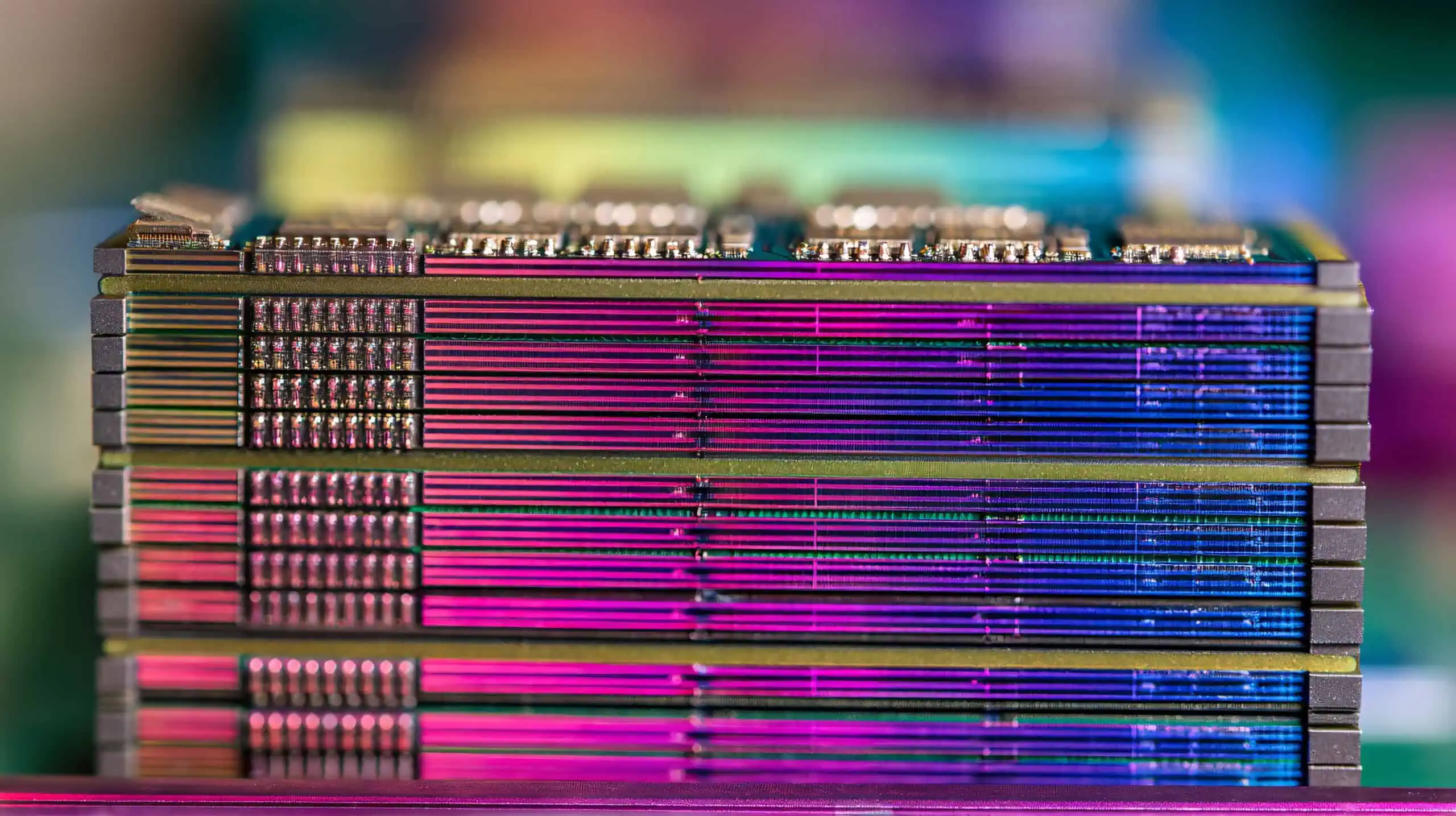
The Memory Market Revolution: How AI is Shaping Demand and Supply
Artificial intelligence inference and training workloads are redrawing the map of the global memory ecosystem. As hyperscalers and semiconductor vendors race to deploy ever-larger models, the balance between capacity, bandwidth, power, and cost is being renegotiated in real time. For memory manufacturers, OEMs, and procurement teams, understanding how this shift plays out in high-bandwidth memory, conventional DRAM, and the broader memory supply chain is quickly becoming a strategic requirement, not a nice-to-have.
At the same time, suppliers are applying lessons from past boom-and-bust cycles, exercising more discipline in capital spending and wafer allocation. This is keeping certain parts of the market tight even as demand grows, with implications that reach from ai data centers to embedded systems and networking equipment.
Background: What High-Bandwidth Memory Brings to AI
High-bandwidth memory is designed to solve a core bottleneck in modern compute: getting enough data in and out of the processor without incurring prohibitive power and latency penalties. By stacking DRAM dies vertically and connecting them to GPUs, AI accelerators, or custom SoCs through wide, high-speed interfaces, HBM delivers far greater throughput than conventional DIMMs within a much smaller footprint.
For large-scale ai systems, the benefits are tangible:
- Substantially higher memory bandwidth close to the compute die.
- Reduced board complexity compared with wide parallel interfaces to discrete DRAM modules.
- Improved energy efficiency per bit transferred, a key constraint in dense server racks.
These capabilities are critical for training and inferencing on large language models and other data-intensive workloads. As a result, the demand profile for HBM is now tightly coupled to the deployment cadence of advanced GPUs and accelerators, including those used in the Nvidia Rubin platform and competing architectures.
Behind the technology story lies a familiar cyclical pattern. Previous memory upcycles often ended with aggressive capacity expansion, followed by oversupply and price collapses. Today, memory makers are signaling a more measured stance, limiting capex, prioritizing higher-value products, and seeking to maintain a healthier utilization rate across fabs.
Market Trend: AI Demand and a Tighter Memory Market
From a memory market analysis perspective, the strongest incremental demand is clearly coming from ai and cloud data centers. Training clusters with many accelerators per node consume large numbers of HBM stacks, often alongside substantial pools of conventional server DRAM. Edge inference, automotive, and networking designs add further pull across the memory landscape, even if their per-device capacity is lower.
Several structural trends are shaping this environment:
- Shift in product mix: Capacity is migrating from commodity DRAM toward higher-value HBM and specialty variants, tightening availability for some mainstream devices.
- Longer planning horizons: Hyperscalers and major OEMs are engaging earlier with memory vendors to align roadmaps and lock in volumes, particularly for advanced HBM generations.
- Cloud-centric design choices: Cloud computing memory trends favor architectures that minimize total cost of ownership over the platform lifetime, rather than simply maximizing peak bandwidth at any cost.
Nvidia’s Rubin platform underscores these dynamics. Targeted at large-scale ai inference in the cloud, Rubin-class systems integrate dense HBM configurations, high-speed interconnects, and optimized software stacks. The memory subsystem is a first-order design parameter: the number of HBM stacks, their capacity per stack, and the achieved bandwidth per accelerator all directly affect workloads per rack, energy usage, and service-level guarantees.
As other CPU, GPU, and custom accelerator vendors respond with their own roadmaps, the industry is seeing a reinforcing loop: more powerful accelerators require more HBM, which in turn pushes memory roadmaps and investment decisions, which then enable the next generation of ai platforms.
Key Insight: Discipline in the Post-AI-Boom Era
Despite the strong AI demand for memory, suppliers are not rushing to flood the market with new capacity. Instead, they are prioritizing profitability and portfolio optimization over pure market share, as highlighted in recent reporting and commentary from industry observers, including sources such as EE Times (see, for example, “Discipline Will Keep Memory Market Tight”: https://www.eetimes.com/discipline-will-keep-memory-market-tight/).
This posture has several implications:
- Selective capacity additions: New investments are focused on leading-edge nodes and HBM packaging, not across-the-board wafer increases.
- Product segmentation: Vendors are steering output toward higher-margin segments such as data-center-class DRAM and HBM, which may constrain availability in cost-sensitive categories.
- Closer customer alignment: Long-term supply agreements and co-development initiatives are becoming standard for strategic ai platforms.
At the same time, DRAM shortages in specific density and speed grades can emerge even when the overall market is not in absolute undersupply. This can occur when fab lines are retooled toward HBM and other advanced products, leaving less headroom for mature configurations that still serve large installed bases of servers, networking gear, and industrial systems.
For engineering and sourcing teams, these pockets of tightness are not just a risk but also an opportunity. They can accelerate device redesign toward more flexible memory interfaces, encourage second-sourcing strategies, or justify investments in higher-capacity modules that reduce the total number of components on the board.
Why it matters for engineers, buyers, and supply-chain teams
The new equilibrium in the memory sector affects three critical planning disciplines:
- System architecture: Hardware engineers must design with realistic memory availability and lifecycle expectations, especially when committing to specific HBM generations or DRAM speed bins.
- Component sourcing: Procurement teams should expect longer lead times and tighter allocation for some parts, and may need to broaden approved-vendor lists across memory, processors, and supporting components.
- Risk management: Supply-chain professionals need scenario plans that address potential DRAM shortages, packaging constraints, or shifts in vendor prioritization toward flagship ai customers.
Organizations that align these functions early—linking architecture decisions to sourcing strategies and supply-chain visibility—are better positioned to navigate constrained supply without sacrificing product performance or launch schedules.
Forecast and Impact Through 2026
Looking toward 2026, several directional themes are apparent, even without relying on precise numerical forecasts:
- Continued coupling of HBM and AI roadmaps: Each new accelerator generation is likely to be accompanied by denser and faster HBM options, further cementing high-bandwidth memory as a cornerstone of large-scale compute platforms.
- Evolving DRAM roles: While HBM captures the headlines, conventional DRAM remains essential for system memory in servers, storage, and networking. Architectural choices will balance HBM for bandwidth-sensitive functions with DRAM for bulk capacity.
- More granular memory supply chain planning: Fabrication, testing, and advanced packaging for HBM will require closer coordination across OSATs, substrate suppliers, and equipment vendors, increasing the number of stakeholders that OEMs must monitor.
Cloud computing memory trends will likely emphasize:
- Configurations that right-size HBM capacity per accelerator to maximize utilization.
- Tiered memory hierarchies combining HBM, DDR-based system memory, and sometimes non-volatile tiers.
- Standardization where possible to simplify qualification and sourcing across regions and data-center builds.
For the semiconductor and memory manufacturing industry, this environment favors players that can execute across design, process technology, and packaging. It also favors customers who can articulate clear, multi-year demand signals, enabling suppliers to make disciplined investments that support growth without recreating past cycles of overshoot and correction.
Practical Steps for Market Participants
Engineering, procurement, and supply-chain teams can take several practical actions to adapt:
- Align product roadmaps with memory availability: When planning new platforms that depend heavily on HBM, ensure that qualification, sampling, and ramp timelines are realistic given vendor guidance.
- Diversify memory options: Where possible, design boards and firmware to support multiple DRAM densities or vendors, reducing exposure to single points of failure.
- Monitor upstream indicators: Keep an eye on equipment lead times, substrate capacity, and packaging announcements, which often foreshadow constraints before they appear in finished components.
- Leverage cross-functional reviews: Bring together system architects, sourcing specialists, and logistics planners early in the design phase to stress-test assumptions about supply, cost, and lifecycle support.
These practices are particularly relevant for organizations building or supplying cloud infrastructure, networking hardware, and high-performance embedded systems, where memory is both a cost driver and a strategic differentiator.
Conclusion
The emerging memory market is being reshaped by ai workloads and the infrastructure needed to support them. High-bandwidth memory has moved from a niche technology to a central enabler of leading-edge accelerators, while DRAM and other memory products continue to underpin the broader compute ecosystem. At the same time, supplier discipline is keeping the market tighter than in past cycles, rewarding partners who plan carefully and communicate clearly.
For OEMs, engineers, and supply-chain professionals, the task now is to integrate market awareness into day-to-day decision-making—from architecture choices to long-term agreements for critical memory components. Staying informed on memory market analysis, following developments such as the Nvidia Rubin platform, and actively managing the memory supply chain will be essential to building resilient, competitive systems through 2026 and beyond.
By tracking these shifts and understanding how they affect component selection and platform strategy, teams across design, sourcing, and operations can better align their roadmaps with the realities of the memory sector.
To keep projects on track amid evolving demand and supply, teams may benefit from regularly reviewing ai and cloud computing memory trends alongside broader component sourcing strategies.
we’re here to support you
Need Memory Components? Secure allocation today.
Whether you’re sourcing DRAM, NAND, or HBM, NetSource can support hard-to-find and allocated parts with global sourcing visibility.