
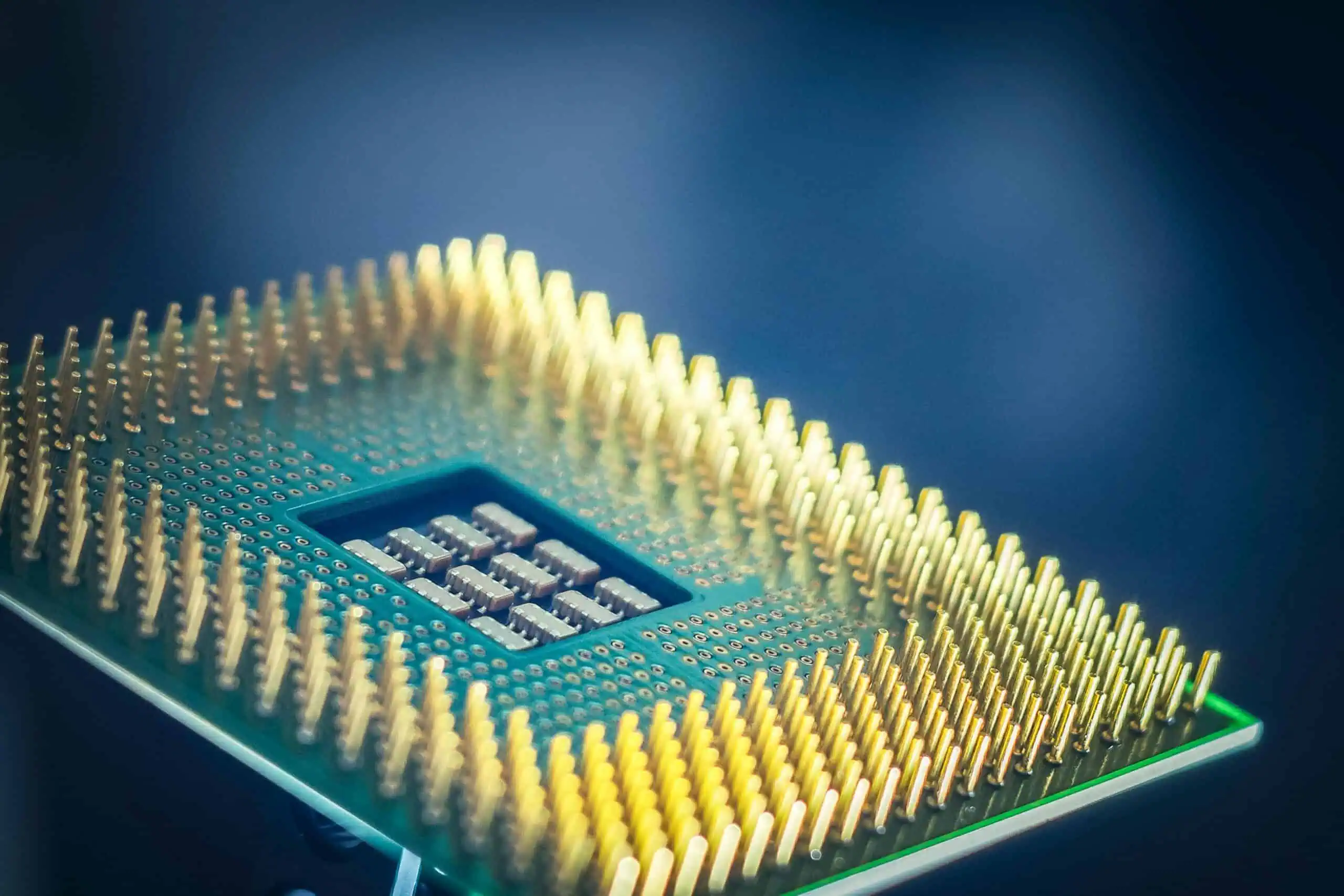
Unleashing Efficiency: Arm’s Game-Changing CPU for AI Data Centers
Arm has introduced its first internally developed CPU tailored for the AI data center, with a design optimized around power efficiency and performance per watt rather than raw peak throughput alone. For operators facing mounting power and cooling constraints, this represents a strategic shift in how compute is specified, deployed, and scaled for modern ai workloads.
As large language models and high-throughput inference become mainstream services, energy efficiency is becoming as critical a design parameter as latency or throughput. The new Arm CPU arrives at a moment when data center architects, OEMs, and semiconductor buyers are reassessing total cost of ownership (TCO) in terms of watts, rack density, and long-term sustainability.
Background: Arm’s Efficiency-First Approach
Arm’s architecture has long been associated with low-power designs in mobile and embedded systems, and that same design philosophy now underpins its push into AI-focused servers. Instead of treating power budgets as a secondary constraint, Arm CPU development for data centers treats power and thermal envelopes as fundamental design boundaries.
The new CPU continues this trajectory by emphasizing:
- Performance per watt: Maximizing useful compute work for each watt consumed, rather than chasing headline-core counts alone.
- Fine-grained power management: Allowing subsystems and cores to scale dynamically with workload intensity, which is critical for variable inference traffic.
- Workload-aware microarchitecture: Tuning for vector, matrix, and memory access patterns prevalent in AI inference and pre-processing, reducing wasted cycles and unnecessary data movement.
For AI applications, the design goal is not merely to run larger models, but to do so efficiently across diverse usage modes—from always-on microservices and recommendation systems to bursty generative AI requests. The result is a server-class Arm CPU platform that aims to deliver predictable latency within strict power envelopes.
Market Trend: Efficiency as a Primary Design Constraint
Several semiconductor trends are converging to reshape the AI data center stack. Traditional performance scaling through higher frequencies and larger dies is running into physical and economic limits, pushing vendors and operators toward new dimensions of optimization.
Key market dynamics include:
- Power and cooling ceilings: Many data centers have hit or are approaching their facility-level power caps, making it difficult to simply add more high-TDP accelerators or CPUs.
- Sustainability and regulation: Regional efficiency standards, carbon reporting requirements, and corporate ESG targets are elevating energy efficiency to a board-level concern.
- AI workload mix: A growing share of data center traffic is inference rather than training, with variable duty cycles that reward architectures capable of granular power scaling.
Advances in chip manufacturing are a major enabler of these shifts. Process technologies, packaging approaches, and interconnect schemes are being evaluated not only for peak density but for how they impact leakage, switching power, and system-level cooling design. For server OEMs and hyperscale operators, this means procurement decisions must weigh process-node roadmaps, expected efficiency gains, and ecosystem support over multiple refresh cycles.
Within this landscape, Arm’s data-center-focused CPU targets use cases where predictable, scalable power efficiency helps stabilize operational costs. By aligning architecture, libraries, and platform design around efficiency-first metrics, Arm is aiming at segments where AI inference throughput must grow without proportionally expanding power budgets.
Why it matters
For engineers, sourcing teams, and supply-chain professionals, the shift toward efficiency-centric CPUs affects decisions well beyond core counts or clock speeds.
- System architects can reassess server designs, rack densities, and cooling strategies when CPUs offer higher performance per watt and more granular power controls.
- Procurement teams gain new levers to manage TCO, negotiating around power envelopes, efficiency roadmaps, and multi-year sustainability targets rather than only unit price.
- OEMs and solution integrators can differentiate platforms by aligning Arm CPU-based designs with AI workloads that value deterministic performance within tight power budgets.
- Component planning teams can better forecast demand for complementary components—such as power delivery networks, memory subsystems, and thermal management solutions—when CPU efficiency trajectories are clearer.
In practice, this means discussions between silicon vendors, system builders, and end users are increasingly focused on watts-per-inference, rack-level power density, and lifecycle efficiency rather than peak benchmark numbers alone.
Key Insight: Efficiency and the Cost of AI Inference
One of the most significant data points underscoring this transition comes from industry research: Gartner projects that by 2030, the cost of performing inference on a 1 trillion-parameter large language model will decline by 90%, driven largely by improvements in semiconductor technology. While that figure spans multiple technology domains—CPUs, GPUs, accelerators, memory, and networking—it highlights the central role that efficient compute will play in making AI economically sustainable at scale.
The new Arm CPU can be viewed as part of this broader roadmap. Its focus on efficient instruction pipelines, cache hierarchies tuned for AI workloads, and power-aware scheduling aligns with the overarching drive to lower cost per inference. Several aspects are particularly relevant:
- Better performance per watt at the CPU layer: Offloading certain preprocessing, tokenization, and control-path tasks from accelerators to an efficient CPU can reduce overall system power.
- Improved utilization of accelerators: When the host CPU manages data movement and orchestration more efficiently, AI accelerators can remain in optimal operating regions, reducing idle overhead.
- Software-optimized efficiency: Arm’s ecosystem support, including compilers, runtime libraries, and AI frameworks, plays a critical role in realizing the theoretical power efficiency gains in production environments.
For AI data center operators, these technical traits translate into more predictable scaling of inference capacity. Instead of adding racks at the cost of facility upgrades, they can explore denser configurations that fit within existing power and cooling envelopes, bounded by the efficiency characteristics of both CPUs and accelerators.
From an investment standpoint, this is influencing semiconductor trends around where capital is deployed—whether into cutting-edge chip manufacturing processes, advanced packaging, or software optimization stacks that extract more useful work per joule. The trajectory suggested by Gartner’s forecast indicates that efficiency improvements are not optional optimizations but core drivers of AI economics over the next decade.
Forecast and Impact Through 2026
Looking toward 2026 technology planning horizons, efficiency-centric server CPUs are likely to become standard in AI-focused deployments rather than niche alternatives. Several implications emerge for the broader semiconductor landscape:
- Platform diversification: As Arm-based solutions mature in data-center environments, operators will have more choice beyond traditional x86 platforms, enabling workload-appropriate CPU selection.
- Evolving procurement criteria: RFPs for AI-centric infrastructure are expected to place more weight on performance-per-watt metrics, sustainability reporting, and efficiency roadmaps.
- Co-design of CPU and accelerator stacks: Vendors will increasingly co-optimize CPU microarchitectures, AI accelerators, and interconnect fabrics to reduce duplication of work and unnecessary data movement.
Legal and competitive dynamics will also shape how quickly these changes propagate. Recent lawsuits, including GlobalFoundries’ patent infringement claims against Tower Semiconductor, illustrate the strategic importance of intellectual property in advanced processes and designs. Such disputes can influence capacity availability, licensing terms, and technology access, all of which factor into long-term planning for AI infrastructure.
For supply-chain professionals, this means contingency planning around foundry sources, process nodes, and IP portfolios is becoming as important as traditional metrics like lead time and unit cost. The interplay between Arm CPU adoption, foundry capabilities, and IP rights will directly impact which server platforms are available and economically viable by mid-decade.
At the data center level, operators will continue to refine how they allocate workloads across CPUs, GPUs, and domain-specific accelerators. Energy efficiency improvements at the CPU layer may justify redesigning parts of the stack—such as offloading certain inference stages to CPU clusters when that reduces total system power without compromising latency.
Implications for Design, Sourcing, and Operations
The practical impact of Arm’s new data center CPU will be felt across multiple decision layers:
- Hardware design teams can revisit board layouts, VRM sizing, and airflow designs around lower or more predictable CPU power profiles.
- Data center operations teams may adjust capacity planning models, incorporating more granular power telemetry from Arm-based platforms.
- Component category strategies—including server-class processors, high-bandwidth memory modules, and power conversion components—will be reassessed in light of shifting CPU efficiency roadmaps.
For organizations aligning their AI roadmaps with sustainability goals, the emergence of efficiency-optimized CPUs offers an opportunity to harmonize performance goals with carbon reduction targets. This extends from core data center deployments down into edge and near-edge infrastructure where Arm CPU architectures already have strong footholds.
Ultimately, the combination of architectural innovation, manufacturing advancements, and ecosystem support will determine how much of the projected efficiency gains translate into real-world reductions in power consumption and operational expenditure.
Conclusion
Arm’s entry with an internally developed AI data center CPU marks a significant step in repositioning general-purpose compute as a central lever for controlling power and cost in large-scale AI deployments. By emphasizing performance per watt and workload-aware design, it aligns closely with broader industry efforts to make AI growth compatible with physical and financial constraints.
For engineers, OEMs, and sourcing teams, the message is clear: tracking semiconductor trends through both architectural innovation and legal developments will be critical to making robust platform choices through 2026 and beyond. Industry news sources, such as the recent coverage of these developments and legal actions in Semiconductor Engineering’s “Chip Industry Week in Review,” provide useful context for aligning technical roadmaps and procurement strategies.
As AI adoption deepens across sectors, organizations that systematically evaluate CPU platforms, accelerators, and supporting components through the lens of power efficiency will be better positioned to balance performance, cost, and sustainability in their data center investments.
Staying informed on emerging CPU architectures, manufacturing shifts, and ecosystem maturity can help technical and procurement teams make more resilient decisions about future AI infrastructure and component sourcing.